Health Risks and Nutrition in Baby Food By: Janet Li

Updated: Apr 6
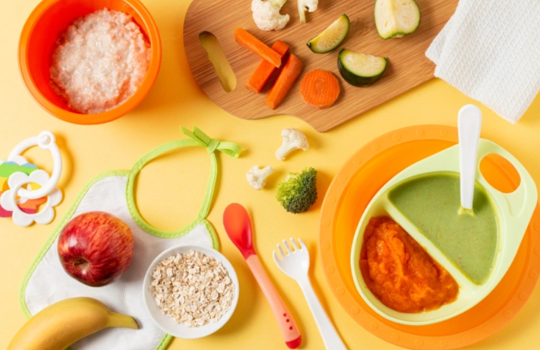
After research revealed that 60% of the 651 infant and toddler food products studied did not meet World Health Organization nutritional guidelines, the safety of baby food has been questioned extensively by parents. Specifically, high levels of toxic metals, sugars, and sodium were found in popular baby food products, including highly regarded brands such as Gerber’s and Plum Organics, who have faced lawsuits regarding these claims. In response, many parents have increased discussion about health risks and nutrition and baby food, as well as started popularizing homemade baby food as an alternative to store-bought.
Safety and health risks
Consuming a healthy diet is especially important during infancy and early childhood, because this is a critical development period of fast growth. Not to mention, young children are especially sensitive to diet imbalances, which can cause long-term health effects.
Cheap and convenient baby food, such as pureed food pouches, has become increasingly popular amongst parents. However, many of these products have an excessive amount of artificial sweeteners added. This causes 2 main problems: (1) overconsumption of sugar can lead to cardiovascular-related and other types of issues and (2) it conditions the child’s palate to be desensitized to and prefer sweeter foods. Both of these issues can lead to the development of serious conditions later in life, including diabetes and obesity.
Similarly, high levels of toxic metals and other pollutants found in food products are particularly concerning, as they can drastically alter neurological development in children.
Potential alternative: homemade baby food
While homemade baby food is often a more nutritious alternative, it does not completely eliminate the risks associated with store-bought products. The reason for this is that the main problem in many products isn’t the store-bought baby food itself; it’s primarily the polluted environment the fruits and vegetables used are grown in. As a result, baby food made at home using these fruits and vegetables—even when they are homegrown—typically also exhibit levels of toxic metals also found in store-bought products.
At the same time, because homemade baby food can offer more variety, it can prevent repeated exposure to contaminants, minimizing the aforementioned health risks. Homemade baby food can also give parents more control over the amount of sugar and nutrients consumed by their child. However, parents should speak with their child’s pediatrician to resolve nutritional concerns.
Prevention
To minimize exposure to contaminants, parents should introduce a variety of different foods to their child’s diet, whether homemade or store-bought. When buying store-bought baby food, parents should check nutritional labels and ensure that store-bought products comply with regulations, including regulations for heavy metals. Parents should take caution and acknowledge that large marketing labels on packaging—such as “organic” and “GMO-free”—aren’t necessarily indicative of the product's nutritional value. Additionally, parents can encourage healthy eating habits to prevent adverse health effects. At the same time, we hope that stricter guidelines on food products are established in order to minimize harm to children.
Works cited
https://www.cnn.com/2024/08/21/health/unhealthy-baby-food-study-wellness
https://www.thebump.com/news/homemade-baby-food-toxic-metals
https://www.salvilaw.com/blog/which-baby-food-brands-facing-lawsuits/
https://parkwooddental.us/are-baby-food-good-for-your-babys-oral-health/
https://m.youtube.com/watch?v=l6UXZkNpoa0&list=PLFVMywAcMWu2WB95ywhCazT1Jly7R9Bfi&index=4&pp=iAQB

Thank you so much for writing this blog and sharing it with us, Janet! I really enjoyed reading it because I honestly had not thought much about how complicated baby food nutrition and safety can be. I think when people see baby food in a store, especially from well-known brands, they probably assume that it has been carefully designed to meet everything an infant needs. Your discussion about the percentage of products that did not meet the World Health Organization’s nutritional guidelines really stood out to me because it shows why parents cannot necessarily assume that a product is healthy just because it is specifically marketed toward babies and young children.
I also thought the discussion about sugar was really…
This is so helpful for new parents who want to feed their baby’s the right kinds of foods. Discussing health risks associated with these food was great
This is an amazing blog Inlove how it provides the risk of homemade and store bought foods can provide for your child along with how to prevent some of them !