Interview with Allison Tepper, MS, RD, LDN


By: Kritika Goel
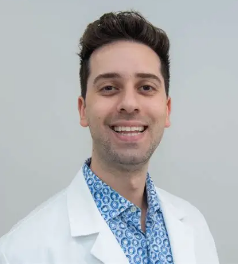
Allison Tepper is a registered dietitian and the owner of Tepper Nutrition, located in Ashburn, Virginia.
Kritika Goel: Thank you so much for taking the time to speak with me today. Just to reintroduce myself, my name is Kritika. I'm a high school junior interning for Dr. Stephanie Waggel at Improve Life PLLC. I'm on the pre-health track, so I'm really excited to learn more about your career and what it's like running your own practice. To start, can you tell me a bit about your academic journey and what inspired you to go into nutrition specifically?
Allison Tepper: I did my undergraduate degree in nutrition and dietetics at Syracuse University. From there, in order to become a dietitian, you do a roughly year-long dietetic internship, which allows you to sit for the exam. Once you pass, you become a registered dietitian. I then got my master's at American University in health promotion management. Now, in order to become a dietitian, a master's degree is required as part of the process.
Kritika Goel: I didn't know you had to get a master's to become a dietitian.
Allison Tepper: Right, to become a dietitian specifically. There's a difference between a dietitian and a nutritionist. A nutritionist can come from a variety of different programs and degrees, but a dietitian has to go through that whole process.
Kritika Goel: Was there a specific moment or personal experience that pushed you toward this field?
Allison Tepper: Growing up, there was a lot of misinformation around food, nutrition, weight, and dieting. Hearing those things growing up was confusing. I didn't know right away that I was going to study this, it was something I decided once I was already at school. But it made sense based on my own experiences and the confusion I felt growing up. Being able to help people build a better relationship with food has been really inspiring.
Kritika Goel: Do you think that misinformation is still present today, with social media and everything?
Allison Tepper: I think it's probably worse now, honestly.
Kritika Goel: Do you come across clients who've heard something online that isn't true?
Allison Tepper: All the time, yes. It happens very regularly.
Kritika Goel: How would you say this career path compares to other fields in medicine, like becoming a surgeon?
Allison Tepper: Even though nutrition and dietetics now takes around six or seven years of schooling, it's still less than a lot of other medical paths. Surgeons, for example, go through many more years of medical school and residency. We do about a year of clinical experience, whereas other medical degrees require a lot more.
Kritika Goel: Does that mean your schedule is more flexible? Do you find it's easier to make time for personal life outside of your career?
Allison Tepper: Having a nutrition private practice that's out-of-network is definitely different from an insurance-based medical practice, where providers might see clients back-to-back all day. We still see clients throughout the day, but we have a bit more flexibility with scheduling.
Kritika Goel: What led you to open your own practice instead of joining a larger organization?
Allison Tepper: I started out working in other group practices. Opening my own was something I was passionate about. I loved the nutrition side and helping clients, but I was also excited about business ownership. It always felt like something I wanted to pursue, so when the time felt right, I decided to go out and do it myself.
Kritika Goel: What does a typical day look like for you running your own practice?
Allison Tepper: Most days involve a handful of clients, plus usually a networking or business meeting. There's a lot of behind-the-scenes admin work that goes into running the business. Every day is a little different, some days are fully client work, but most days are a mix of things.
Kritika Goel: Do you prefer the behind-the-scenes work, or the client-facing part of your job?
Allison Tepper: I think the combination is fun, honestly. It keeps things interesting and breaks up the day. I love the client work, but the behind-the-scenes side is fun too.
Kritika Goel: That's great to hear. A lot of our guest speakers this summer have said the same thing, that the patient-facing part of medicine is their favorite. What was it like setting up your business? Did you start networking right away?
Allison Tepper: Networking is a huge piece of it. It's a combination of one-on-one connections and event-based networking, and now there are also a lot of online opportunities to get your name out there, like listservs or websites that list health providers in the area. I used a combination of those alongside one-on-one networking with local providers.
Kritika Goel: I know you're part of the LCCC. How did you get involved with them?
Allison Tepper: A friend of mine, who's also a dietitian, mentioned there was a health and wellness group within the chamber. It seemed like a great way to meet people and get involved in the community, so that's how I started.
Kritika Goel: How do you see the nutrition and wellness field changing compared to when you started?
Allison Tepper: Social media is definitely one of the biggest changes. There's a lot of good information out there, but also a lot that's concerning, so sifting through the noise and misinformation is a big challenge for people. GLP-1 weight loss medications have also changed the landscape quite a bit in terms of how we work with clients. Eating disorders have always existed, but there's a lot more awareness and information available now, which is a big part of the population we work with. There are more conversations and more resources, which is great, even as our culture brings its own challenges.
Kritika Goel: I agree, it feels like the conversation has opened up a lot. Do you work with a specific type of client, or is it pretty diverse?
Allison Tepper: We work with a mix, but our main focus is eating disorders, emotional eating, and intuitive eating, really the relationship with food and finding neutrality around it. We also work with clients who have GI conditions and other medical diagnoses. We have a sports dietitian and a pediatric dietitian on our team, and we also do a lot of perinatal and women's health work.
Kritika Goel: That's a great range. What's one thing you wish someone had told you when you were starting out?
Allison Tepper: The best advice I got was that you just have to start without having it all figured out, because there's always going to be something new to learn. Something I wish I'd known is that even 10 years into business, you're still continually evolving and learning. Things around business ownership never really stop coming up, not in a bad way, that's just how it is. I think knowing that upfront would have been helpful.
Kritika Goel: Is there a specific way you market yourself and your practice?
Allison Tepper: We do a mix of things. The biggest is networking with local providers who have similar approaches, so we can refer clients to one another. We also do online marketing, our website, Google Ads, and behind-the-scenes SEO work.
Kritika Goel: It sounds like you have a lot to handle. What's the most rewarding part of all of this?
Allison Tepper: Definitely the client work. Seeing clients improve and make progress is huge. I also have a team of dietitians who work with me, and getting to work alongside them is really wonderful too.
Kritika Goel: Thank you so much, that's all the questions I had. Is there a website or any links you'd like me to include when I post this?
Allison Tepper: It was fun to chat with you. I'll send over some links after this. Let me know if anything else comes to mind.
Kritika Goel: Thank you, have a great day!
Allison Tepper: You too!

This was such an insightful interview! I really enjoyed learning about Ms. Allison Tepper’s journey in nutrition and dietetics, especially her experience transitioning from working in group practices to starting her own private practice. I also found her perspective on the impact of social media and nutrition misinformation especially interesting. Her advice about not waiting until you have everything figured out before getting started is something that can apply to so many students pursuing healthcare careers. Thank you for sharing this interview, Kritika!
This is such an inspiring interview! It was especially interesting to hear about how the nutrition field is changing, especially with more awareness about these topics