Interview with Dr. James C. Tinsley, MD


By: Jordane Donfack
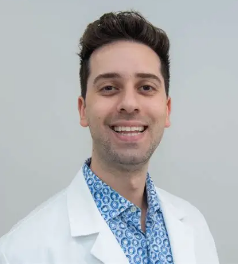
Dr. James C. Tinsley is a family medicine physician located in the Newport News, VA. Dr. Tinsley provides Direct Primary Care (DPC) at Lighthouse Direct Primary Care.
Jordane Donfack: Okay, perfect. So let me reintroduce myself. My name is Jordane Donfack. I'm currently going to Christopher Newport, so it's, like, in the area. And I'm going into my sophomore year, and I'm on the pre med track. So that's something that kind of inspired me to do Dr. Waggel's pre health internship, because I was like, oh, I kind of want to get some medical experience while being in the summer and things like that. I liked that she did psychiatry, and I liked especially because she was doing, like, research methods and things like that. So, yeah, that's my kind of personal backstory, but I'm mainly here to talk about you and kind of ask, like, what inspired you to perform or go through the doctor route.
Dr. Tinsley: So my mom was an ICU nurse. My dad was not medical at all.
So I was introduced to medicine at a really young age. My mom would take me into the units when I was a kid, small kid, and I got to know the docs and the nurses, and I wanted to be a doctor forever since I was a kid. It was my childhood dream.
Jordane Donfack: Wait, so your mom was an ICU nurse, but you didn't want to choose, like, that nursing RN route? What made you decide, like, full doctor?
Dr. Tinsley: Because back then, the docs were in charge and medicine was different. Yeah, they were clearly in charge. They ran the show.
Jordane Donfack: And you wanted to run the show, I'm assuming.
Dr. Tinsley: Yeah, the doctors were everything back then. There was no doubt the doctors were in charge.
Jordane Donfack: Oh, so now kind of you're seeing, like, you think, like, there's a more change for, like, nurse practitioners and physician assistants.
Dr. Tinsley: Now doctors are no longer in charge.
Jordane Donfack: Do you think if you went, we're going to school now, would you still go the MD route? Or would you do, like, PA or NP.
Dr. Tinsley: Oh, no, I do the MD route, but I would do this right out of the gate.
But, this was not an option when I got out of residency.
Jordane Donfack: That was gonna be my next question. What inspired you to open a primary care facility? Because I know you do direct primary care, so that's something different.
Dr. Tinsley: Yeah. Do you know what direct primary care is?
Jordane Donfack: I looked a little bit into it, but if you could explain it a little bit more, that'd be great.
Dr. Tinsley: So it's kind of like concierge, except I don't bill insurance for my services.
Jordane Donfack: Is there still a co-pay that they're paying, for example, to.
Dr. Tinsley: No, it's a monthly fee, like Costco.
Jordane Donfack: Oh, interesting. So your patients pay monthly fees and they can visit you anytime they want.
Dr. Tinsley: Yeah.
Jordane Donfack: Wow.Okay, I like that. What inspired you to go that route instead of, you know, billing insurance and having those high co-pays and things like that?
Dr. Tinsley: I'm a better doctor doing this. This is how doctors used to do it a long time ago. This is how they did it when I was a kid.
Jordane Donfack: See, I didn't know that because I'm just growing up now. So I'm like, I'm going to doctor's visits and I'm paying my $10 copay for my one time visit with the doctor that I'm seeing.
Dr. Tinsley: Here's the thing. You're not going to a doctor's visit. You're calling your doctor and you're waiting three to six months for your doctor's visit, right?
Jordane Donfack: Yes, exactly.
Dr. Tinsley: Well, once upon a time, you would call your doctor and you would see them the same day or next day. And once upon a time, when you saw that doctor, you would spend 30 to 60 minutes
Jordane Donfack: So during your 30 to 40 minute visits. You're able to get through, like all of the patients' concerns, I'm assuming
Dr. Tinsley: My new patients I spend two hours with.
So it takes longer to not write a medication than it does to write for one. So it's really easy to stroke a script and send them out the door.
Or send them to a specialist and kick them out the door.
Or order an MRI and send them out the door.
But stop and think, does this person need this medication? Does this person need this MRI so I can stop and do research on people like I'm doing right now.
Like this lady has an elevated D dimer, but does she need to get. Do I need to send her to the er? Do I really need to send her to the ER, do I really need to order ultrasound on her legs? It's Friday afternoon. If I send her to the ER, she's gonna be there all night. Especially with the ERs being jam packed with people. Like, she's missing a lot of things that go along with a blood clot in her legs. And there's other things that, as I'm doing research that can make this much more than a blood clot. However, if I was in a system seeing 30 to 40 patients a day, I saw this elevated D dimer, my nurse would be calling her and telling. Her to go to the ER immediately.
Jordane Donfack: But, you're taking the time with your patients. You're doing research for your patients to actually see whether or not this is the proper, like, path, whether it's appropriate.
Dr. Tinsley: Yeah.
Can I just order an ultrasound on my own and rule out a dvt? Or do I need to send them to the ER?
Jordane Donfack: Wait, that's really, like, very much patient focus, which I really appreciate. Which I really like, because sometimes I feel like, like, medical costs and everything, everyone's just worried about, like, seeing patients as much as possible to, you know, earn the money.
Dr. Tinsley: I don't get paid to see patients. I get paid to practice medicine. And if she goes and gets this ultrasound at the hospital, it's gonna cost her $888, whereas if I do it, it's gonna cost her about a hundred.
Jordane Donfack: Wow. So, again, patient focus. Patients are able to see a doctor for an extended period of time.
And not only that, it's affordable for them.
Dr. Tinsley: Right? Because if you can't afford medical care, you're denied medical care.
I could be the smartest doctor in the United States. I could have the cure for diabetes. And if my patient can't afford it, I might as well be the dumbest. Is this starting to make sense?
Jordane Donfack: Yes. That's why I was inspired by, like, your statements online. That's the type of care that I want to focus on because, like, being a younger, like, hopefully practicing physician in the future, I want to change kind of like you're doing the focus of medicine from actually focusing on the patient, spending more time with them, and, like, being able to, you know, properly diagnose them and make sure, like, this is the proper course of treatment?
Dr. Tinsley: Yeah. You're not going to change the system, working with it. I've heard this mantra for 20 years. “I'm going to change the system working within the system.” No, you're not. You're never going to change the system. They have all the money and all the power.
Jordane Donfack: Mm. So doing it out of the system, like opening your own practice with Direct patient care did that.
Dr. Tinsley: Yeah. Well, for me, it was do or die. I was gonna quit being a doctor altogether seven years ago.
Jordane Donfack: Really? Okay.Because you just did not like how it was functioning at all.
Dr. Tinsley: I hated being a doctor. I didn't want to be a doctor anymore.
I worked 12 hours a day for 14 months, and I just could not do it another day.
Jordane Donfack:
Were you still practicing, like, family medicine or were you…
Dr. Tinsley: I was doing family medicine. I was working at the VA. That was my last job before I quit. And I'd worked for 12 hours a day for 14 days. And the guy that runs a hospital, guy named Dr. Bates, who's the biggest douchebag I ever worked for, said that I need you to work weekends. And I told him that I've already worked 14/12 hours a day for 14 months. I'm exhausted. I've said, my daughter's cried to me twice and said, daddy, you're never home. And once it was on Father's Day, and he said, I don't care.
And I said, well, I'm done.
Jordane Donfack: And that was your breaking point. That's when you were like, I have to leave the system.
Dr. Tinsley: Yeah. The argument escalated from there, and it was not pretty. But that was it. I came home and I told my wife, I don't want to be a doctor anymore. I cannot do this another day. But somebody helped me. I was online and the DPC community found me. They steered me towards direct primary care and saved my career because I was going to quit medicine altogether. Now I'm online, I find doctors that are like me, and I help them.
Jordane Donfack: Wow. You're helping others. The other doctors that are at the breaking point of their career because they're like, being a doctor is not fulfilling enough. So, It was not what you thought it was going to be when, you know, were leaving med school.
Dr. Tinsley: No, definitely not. They don't teach you this in medical school.
Jordane Donfack: So as someone coming up, like me, would you recommend, like, going the direct primary care route or, you know.
Dr. Tinsley: Oh, yeah, right out of residency, go right into direct primary care.
Or if you're going to be a specialist, going to direct specialty care, specialists can do this too.
We have three cash cardiologists. And they still do the same type of thing, the same type of, you know, seeing their patients for longer than, you know, 10 to 15 minutes.They'll do cash visits and cash studies. So an EKG at Sentera costs or Riverside costs $320 and they do an EKG for $18. A stress echo at Sentera costs $1,139, at Riverside $1,800.
And he does it for.
(He was trying to find the pricing)
Where is it? I can't find the stress echo. Well, let's just do a regular cardiac echo. Echo cardiogram at Sentera is $1536. And with this guy is $251.
Jordane Donfack: Everything's cheaper.
Dr. Tinsley: Yeah. He does stress tests. He does a treadmill stress test for $91.
Jordane Donfack: That's like more than half off what it cost at major hospitals
Dr. Tinsley: Yeah, no, it's more like a 10th.
A treadmill stress test Sentara is $1119.And this guy does them for $91.
Yeah.So the question is, it's not why is this guy so cheap, it's why are these guys so expensive?
Jordane Donfack: Exactly. And that's a question still. I don't even really know. Like, why are, why is it so expensive to take those tests at a hospital?
Dr. Tinsley: Like, well, for every person you see walking around a hospital drawing a breath, they draw paycheck and benefits.The Sentara CEO in one year made $33 million.
Jordane Donfack: $33 Million just for yourself.
Dr. Tinsley: Yeah. Now you see why healthcare is so expensive.
Jordane Donfack: Wow.Because it's a for-profit system, right?
Dr. Tinsley: Well, no, no, legally, technically, they're a non profit system. They're a 501C.
They're taxpayer subsidized non profit hospitals.And all of them in our area are non profit,which means they don't pay federal, state or local taxes. Now that's 33% of taxes that they don't pay in return. So it's a really good deal for them. And that doesn't include the property tax. So locally, they're not paying local or state taxes.They're not paying property taxes, and provide 2.5% of earnings to charity, which is nothing. And that's money taken from teachers, firefighters, police officers, new roads.I mean, it's billions of dollars, Billions.
Jordane Donfack: Of dollars that are not going to where it's supposed to be.
Dr. Tinsley: Right. And they're stealing from sick people.
Jordane Donfack: That's just, that's an evil system. That sort of system is so bad.
Dr. Tinsley: So bad that health care purchased through insurance is 18% of the economy.Meaning that 1 out of every $6 you spend every day gets washed through those guys.That's more than a food, energy and military spending combined
Jordane Donfack: That's definitely something. And it's clear to.Clear to me that direct primary care is the correct system.
Dr. Tinsley: Yeah, the system's not sustainable. It's actually crumbling under its own weight.
Jordane Donfack: So from like 10, 15 years from now, do you not see the system being sustained at all?
Dr. Tinsley: No, we can't afford it.
So it's already shifting. 60% of companies have health plans instead of health insurance, which is a long story, if you want to hear about it.
Jordane Donfack: Question, what is the difference between a health plan and health insurance?
Dr. Tinsley: Okay, so health insurance is where the take a cut, like Aetna or Blue Cross takes. Collects our premiums, our money every month, and they'll put it in like a big giant bank account somewhere and collect interest.
And then let's say I get sick and I need my appendix out. They're supposed to pay for my hospital bills, Right?
So it's a shared risk. But if I don't, if I don't get sick, they keep all the money.
So that's kind of how that works. But in the meantime, they're collecting interest in all that money. And if they lose money, if they pay for things. Oh, so they don't want to pay for things. Oh, so now what a health plan is, it turns the company into the owner. Let's say you're selling clothes. And you have 15 employees. Well, you collect the Premiums from your employees.
Now, with health insurance, your employee gives half and the company owner gives half.
The company owner pays half of every health insurance plan for all their patients. So this cost is double. So if you're paying health insurance and you're saying it's costing me $500 a month. Well, your employer's kicking in $500 a month for you.
Jordane Donfack: So they're matching you.
Dr. Tinsley: Yeah, they're matching you.
So while the employer says, all right, my employees are going to pay $500 a month and I'm going to put that money in escrow and collect interest on it. So the employer becomes the health insurance company, and then the employer is going to buy the health care for his employees.
Jordane Donfack: Oh, so now it'se, I guess the hospital system that's in charge of patient's health care or like, who's putting money in.
Dr. Tinsley: Right. Now, you would think the hospital would want to buy the $400 CT, not the $4,000 CT, right?
I'll explain to you why they don't want to do that. They make more money buying the $4,000 CT, and I'll explain that to you in a minute. But I'm going to tell you that this is just to explain the difference between health plans and health insurance. Now, with health plans, the guy, the owner, obviously wants to buy the $400c CT because he'll have more money left over by the end of the year, right?
So he is a shopper. He is going to shop for healthcare. He's going to come to guys like me and say, I don't want that. If I go to Sentera, they're going to sell me that CT for $4,000. Or, I'm going to go to Dr. Tinsley and buy that CT for 400.
Let's say somebody gets cancer in that company and it wipes out all the money you have
And then it wipes out. Then it wipes out all that and then some. It could drive you into debt, right?
Jordane Donfack: Yes. Now you're losing.
Dr. Tinsley: So what? That's where the system breaks down. However, your company can buy, also buy what's called stop gap Insurance. It's kind of like a catastrophic plan. So worst case scenario, somebody gets horribly ill or they get in a terrible car accident and wipes out all your savings for your, for your, your insurance pool. But you don't go broke. It just takes all the money from your, your medical payments, you know, your medical call reimbursements or your health plan charges.So all you do is you lose that, but then the stopgap insurance picks in and pays everything. But you know, how often does somebody get cancer or getting something catastrophic?
Jordane Donfack: Not, not as often as like, I don't know, common cold or something.
Dr. Tinsley: Yeah. So overall they're going to make money.
Jordane Donfack: So now I guess you're seeing a greater shift in going to health plans rather than.
Dr. Tinsley: Yeah, I just had a company owner sign up today. He's not aware of all this. He's going to start learning. Imagine the next year or two he's probably going to want to buy health care through me.
Jordane Donfack: Wow. See these are the things about health care, like the financial side of things that like me as someone so like, like I'm still a college student. Like this is something that I just did not even realize were happening.
Dr. Tinsley: So, yeah, this is the shift you see. But now here's the difference between health insurance and health plans.Health insurance is under a different set of regulations. It's called the 8020 rule because Congress saw health insurance having a big party with everybody's money.
So they can, they came with this 8020 rule that for every hundred dollars we pay them, they have to spend at least 80% on us. So they can't just go to Miami and have a party.
It sounds like a good law. But here's what it really means is that if an insurance company wants to make $20, they have to spend a hundred dollars. So now\ to make $20 billion, they have to spend 100 million.
Jordane Donfack: So they're up to charging.
Dr. Tinsley: Yeah. So do they want to buy the $4,000 CT or do they want to buy the $400?
Jordane Donfack: They're gonna want to buy the $4,000 CT.
Dr. Tinsley: Right. That's what happened. And would the hospital rather sell the $400 CT or the $4,000 CT?
Jordane Donfack: $4,000. Because they're gonna be making more.
Dr. Tinsley: Right. Everybody's having a party with our money except for us.
That's what's happened. And that's why health care purchased through health insurance is now 18% of the economy.
Jordane Donfack: Wow. See, a light bulb in my head.You think some law is going to protect the patients when it's actually just making everything worse by upcharging.
Dr. Tinsley: See, that's the thing. You can't regulate the free market. It's like regulating gravity. It's gonna find its own path. We're gonna find a way around it.
Jordane Donfack: Yes. And that they did. They have found a way around it.
Dr. Tinsley: Yeah. They should just leave it alone and let the free market take care of itself.The free market makes everything better, faster and cheaper. I am the free market.
Jordane Donfack: That's why I'm always confused. Like, I'll see people's, like, hospital bills for having a baby, and it's like $16,000.I'm like, they just went in there to have a kid. How is it already that expensive?
Dr. Tinsley: But the DPC couple up in Williamsburg paid a thousand.
Yeah, but they have this. They have a health plan, not health insurance.
Jordane Donfack: This health insurance market is just making people feel like they can't even go see, like, they won’t see a specialist or go to an ER visit because the bill is just going to come back and it's just going to be astronomical.
Dr. Tinsley: Well, people aren't even going to the ER anymore. They're just staying home and dying.
But that's where I come in.I'm making sick people better again.I'm giving them access to care. I'm giving them longer time with me, and I'm making it affordable for them.They're getting their labs and they're getting their medicine, and you see all types of patients, all ages and everything.I have never turned anybody away.
So that's how this works. The Free market has made me a better doctor. It’s not that I'm a smarter doctor, but, you know, if you're running a race with an opponent and you tie their legs together, of course you're going to win. You don't have to be fast.
Jordane Donfack: So after you left your VA job, you decided to open this new practice.But how was that, like, set up wise? Was it difficult? Because, like, I can sort of see myself opening something up like this in the future. But, like, in terms of business expenses, like, how do you run it?
If that makes sense.
Dr. Tinsley: There were no DPC docs here. So that was really hard.
So, yeah, I was chatting with people on Facebook, and I said, well, you know, it sounds like it was really good. I said, you guys, this sounds like it's too good to be true. Like, if this is such a good idea, why are there no DPC doctors in an area of 1.8 million people? And they said, we don't know, but it's working great for us. And one of them recommended that I go visit a DPC doc for a day or. And I said, well, that's what I'm gonna have to do, because right now, I just didn't believe it. It sounded too good to be true.
I was gonna quit medicine anyway. So I got online, and went to the nearest one I could find was up in Lynchburg. I asked him, and I drove up and spent the day with him. And by lunchtime, I saw how easy it was, and I said, is this it? He goes, this is it. I said, I don't need a whole day with you. And I took some pictures of his office, you know, set up, and I came home and started setting this up. And that was seven years ago. And now there's seven of us out here, plus specialists.
Jordane Donfack: Wait, so were you the first in the area?
Dr. Tinsley: Well, I was the first on the peninsula. Turns out Emily o' Rourke opened at the same time in Chesapeake.Now, she actually opened her office a couple of months ahead of me. But, we both had a hard open the same day.
Jordane Donfack: So are you guys still, like, currently working together
Dr. Tinsley: We don't work together.I mean, we chat and we exchange ideas because there's nobody here that's gonna help us do this. The hospitals did not want this to succeed. They have done everything to make us fail.
But, yeah, we were considered such small potatoes.They didn't care.But now they're seeing us as a threat because they're actually refusing my consults now.
And you know what? We are a threat. We're not a threat to patients, but we're a threat to corporate health care.In a fair, free market fight, without the laws that hospitals have imposed on us, we wouldn’t dust them, we would bury them. I'm better, faster, and cheaper in every way.
Jordane Donfack: Right, right. No, this was, this was really honestly inspiring to see a new direction in healthcare because sometimes I will be shadowing different practitioners, things like that and I'm like, wow, this, is this really what healthcare is? This is really what I'm going to school for?
Dr. Tinsley: No, it's not really what health care is. That is corporate health care. That's horrendously bad and we all know it. And the world knows that we're ranked like number 15.
Jordane Donfack: We're number 15 and we spend the most on healthcare than any other developed nation, it is crazy.
Dr. Tinsley: You know what I'd like to see? I'd like to see a study that just looks at direct primary care and direct specialty care and then, and then ranks us in the world among the other health care systems and see where we land.
Jordane Donfack: Probably higher
Dr. Tinsley: It's not that I'm a great doctor and it's not that I'm such a smart businessman. It's just that they suck so bad and standing next to them, I look great. You know, you take a 5 foot 10 guy and stand him next to a 5 foot 2 guy, he looks like a giant, right? He's not a giant, he's just smaller than the other guy.
Jordane Donfack: This is definitely opening my eyes. Thank you so much for your time Dr. Tinsley. I hope I can shadow in your office to see how the practice works in real time. What you do is truly inspirational and I’m glad you took time out of your day to explain your journey to me.


An amazing interview! Thank you for taking the time to sit with him and ask him these questions. Especially from someone with the medical system, its interesting to see his perspective and advice!
This is such a thoughtful interview! It was interesting and eye opening to hear about the different issues in healthcare system especially in hospitals from Dr. Tinsley’s perspective.
Thank you for sharing this interview, Jordane! I found it really interesting to learn about Direct Primary Care because it offers a perspective on healthcare that I hadn't been exposed to before. I especially appreciated hearing Dr. Tinsley's passion for spending more time with patients and creating a practice that prioritizes individualized care over rushing through appointments. It was inspiring to see how he built a practice that aligns with his values and his vision of patient-centered medicine. Another point that stood out to me was his advice about being willing to take a different path when the traditional system no longer aligned with his goals. His journey shows that there are many ways to make a meaningful impact in…
Thank you so much for sharing this interview, Jordane! I genuinely enjoyed reading it from beginning to end because it felt like an honest conversation rather than a scripted interview. I especially appreciated how you asked follow-up questions whenever Dr. Tinsley introduced a concept that might not be familiar to students. Instead of assuming everyone already knew what Direct Primary Care was or how it differs from the traditional healthcare model, you took the time to ask for clarification. That made the interview much easier to follow and much more educational for readers who are still early in their pre-health journey.
One of the biggest takeaways for me was Dr. Tinsley's emphasis on spending more time with patients. Throughout this…