Interview with Dr. Ramakrishnan Kavaserry, DPT, CDN at RVA Physical Therapy and Sports Rehab by Avni Loya

Updated: Jul 30

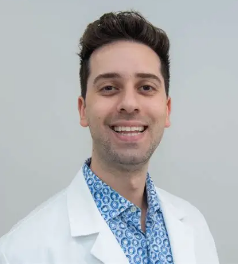
Dr. Ramakrishnan, affectionately called Dr. Ramky by his patients is the director and senior physical therapist at RVA Physical Therapy. He started his career practicing physical therapy at a skilled nursing facility and has experience working with seniors and treating a variety of age-related conditions. He prides himself in successfully rehabilitating his patients back to their active lifestyle.
Avni Loya
Good evening, Dr. Ramky! Thank you for interviewing with me. Let's get started right away: What inspired you to become a physical therapist and what has kept you passionate about the process?
Dr. Ramakrishnan Kavaserry
So, basically physical therapy, it helps you heal somebody's pain without any major surgical procedure. See, surgery is unavoidable on certain patients, but for most part of it we can fix somebody's pain while without going through the surgery part. So that's one thing.
And second thing is, as a kid I always loved ergonomics, how people sit, how people walk, how people move around. So that is another thing. So now I get an opportunity to teach people, you know, all those things.
So that is one of the main things I always talk about posture to my patients.
Avni Loya
And what are the most common conditions or injuries you treat in your clinic?
Dr. Ramakrishnan Kavaserry
Usually back pain, sports injuries. We treat a lot of shoulder pain, knee issues, ankle, foot. And sometimes we do have patients who have vertigo and all those things.
Avni Loya
What would you say is your favorite kind of procedure?
Dr. Ramakrishnan Kavaserry
I don't have anything like that because I try to do everything. All kinds of procedures, like if not one treatment can fix somebody, I always try to find an alternative method to fix the problem. If something doesn't fix it, I want to go with the next technique.
So, I don't have one particular procedure that I wanted to follow.
Avni Loya
That kind of leads to the next question. How do you develop individualized treatment plans for a new patient?
Dr. Ramakrishnan Kavaserry
Based on the patient's needs. Not every patient will love cupping and dry needling. They like something else.
So based on their needs and based on the condition, we do a thorough evaluation.
Avni Loya
Can you walk me through what a typical day looks like for you as a physical therapist?
Dr. Ramakrishnan Kavaserry
I go with patients with lots of pain and aches. But a typical day is usually rewarding because when the patient leaves, they usually have less pain or no pain. So, the reward comes right there.
Avni Loya
I noticed that with your clinic, you have a lot of equipment, a lot of devices. You also have a pool. How does technology, like wearable devices and emotional analysis systems, specifically AI, changed your practice over the years?
Dr. Ramakrishnan Kavaserry
See, basically, I don't know if I can trust the AI completely with the patient yet. Even for my notes, I'm not able to say it is error proof. So, I'm using the technology that actually has been proven that it will help to develop everything.
So, if we use a monitor on a patient to record blood pressure or something, we still use the regular stuff. We actually manually enter the data still. I'm not comfortable to leave it to AI yet.
And I'm not saying I will never be comfortable because once AI is all revamped, I think we all will be ready for that.
Avni Loya
So, what are some of the biggest challenges that physical therapists face today and how do you overcome that?
Dr. Ramakrishnan Kavaserry
See, basically, we have to make sure the patient is comfortable because we spend more time with the patient than a doctor. (3:36) So the patient is comfortable listening to us and trusting their body with us to fix their problem. (3:44) So that is the most important thing.
Avni Loya
It's definitely more physical as well.
What advice would you give students who are interested in pursuing careers in physical therapy?
Dr. Ramakrishnan Kavaserry
Go for it. Because we have a lot of patients who need the help. Not one person can fix everywhere.
We need more students who go for physical therapy so that we can go through a holistic approach to fix the patients.
Avni Loya
And in other health care professions, there's a lot of connectivity where you'd have diagnoses, doctors kind of communicate with surgeons. How do physical therapists collaborate with physicians and athletic trainers?
Dr. Ramakrishnan Kavaserry
We do have physicians sending us with the diagnosis, but sometimes we have to go dig deep and find the root cause. See, because before what happens, an orthopedic doctor can look at you the whole person. Now they only go, say, like a person who's looking at the hip, they only look at the hip joint.
A person who looks at the shoulder joint, they only look at the shoulder joint. And the back or neck person, they only look back. So, we actually try to evaluate everything to bring in that integration.
And then we write our note back to the doctor saying, hey, patient also has this pain. And then once they approve, we can go ahead and see them forever.
Avni Loya
And your kind of using some non-traditional or alternative medicine techniques as well, cupping, acupuncture. How do you feel about that research to back that up?
Dr. Ramakrishnan Kavaserry
So basically, there is a lot of research that has been done on dry needling and cupping to help increase the blood flow. So, for us to get the pain relief or get the mobility, we want the blood flow to be helped. So that's the most important thing.
Avni Loya
And you think that these techniques are going to be more proven as well?
Dr. Ramakrishnan Kavaserry
It's actually proven a lot. Dry needling has helped a lot of patients. So does cupping.
And it's not just with cupping. What we are doing is, after these two procedures, we do like manual therapy and visceral release. So those are the techniques actually help sustain their pain relief.
And these cupping and dry needling actually adds on to it. And electrical stimulation, ultrasound, we have laser, we have aquatic therapy. The ultimate goal is to get rid of the patient's pain.
So, you can bring in everything that's in the bag. You just want to reuse the right modality for the patient.
Avni Loya
And I know you also have a lot of volunteer services here. How did you decide to create that program?
Dr. Ramakrishnan Kavaserry
Because I want more students to go into healthcare. (6:31) And that's how we started.
Avni Loya
Thank you.


Hi Avni! I really enjoyed reading your interview with Dr. Ramakrishnan Kavaserry! I thought it was really interesting hearing about physical therapy from someone who works with so many different types of patients and conditions. I especially liked his explanation of why he chose physical therapy because he talked about being able to help patients manage and improve their pain without immediately having to rely on surgery. I also thought it was interesting that he has always been interested in how people sit, walk, and move because that connects really well to what he does with his patients now when he talks to them about posture and movement. I liked hearing about how individualized physical therapy has to be because…
This was such an insightful interview! I really enjoyed learning about how physical therapists approach patient care from a holistic perspective and tailor treatment plans to each individual’s needs. I also found Dr. Kavaserry’s thoughts on AI especially interesting; technology can be helpful, but having the experience and judgment of a healthcare professional is still so important. His emphasis on compassion, teamwork, and finding the root cause of a patient’s problem really stood out. Thank you for sharing this interview, Avni!
Wow, thank you for sharing this interview, Avni! I learned a lot about both the field of physical therapy and different techniques as well as Dr. Kavaserry's path in medicine